Building the Future of Sustainable Materials
WINNER: Tibbetts Award
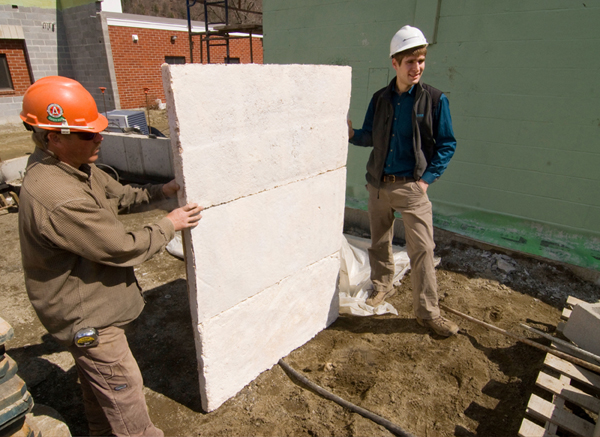
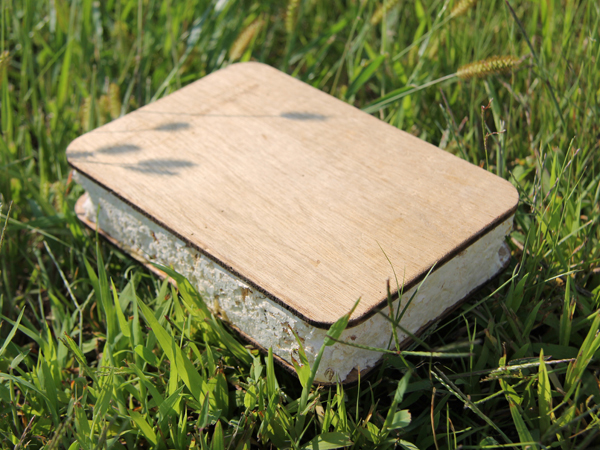
Ecovative adapts living systems to create environmentally responsible materials and products to help people live in harmony with the rest of planet Earth. Ecovative has developed a low embodied-energy, compostable material that is literally grown into custom shapes and competes with petrochemical based plastic foams in cost and performance. Today, Ecovative is using this technology to grow Mushroom® Materials and has partnered with Sealed Air to scale the sales, distribution and manufacture of Restore™ Mushroom® Packaging. Our customers include a number of Fortune 500 companies that range from computer manufacturers (Dell) to furniture companies (Crate & Barrel), who sought to reduce their environmental footprint without adding new costs. Every plastic foam packaging part we replace means fewer end up in a landfill for an eternity.
Ecovative is challenging the current manufacturing paradigm of synthetic materials. Rather then using high-embodied energy processes and finite resources to manufacture materials, our company takes advantage of regionally sourced farm waste to grow high performance products. Ecovative’s current biomaterials are comprised of lignocellulosic agricultural waste bound cohesively into designated shapes by filamentous fungal tissue (mycelium), analogous to traditional composite fillers and binders, respectively. The resultant biomaterials offer renewable, safe alternatives to traditional plastic foams, while remaining cost and performance competitive. The ability to sell these products at parity with synthetics is related to the platform’s open-loop production process. Unlike plastics, which are coupled to the price of fossil fuels, the Mushroom® Materials can grow from farm wastes like corn stalks or seed husks. The ability to grow, rather than manufacture, these materials also reduces cost as the products self assemble using the calories in the farm waste for all energy needs. Ecovative’s current platform is capable of tuning the biomaterials’ mechanical, water, and thermal properties by modulating the agricultural filler (substrate) and fungal tissue to compete with a wide range of conventional materials. Ecovative’s long-term goal is to become the first industrial age company to have a net positive impact on the planet’s ecosystem. This means eliminating the negative environmental impacts of production through minimizing energy consumption and CO2 emissions. Producing a product that will sequester carbon and deliver nutrients back to the Earth when composted is paramount. Ecovative is a triple bottom line company. That means we measure our success based on positive impacts to the planet and the people living on it, while still running a sustainable and profitable business. The focus on our customers needs, coupled with Mushroom® Material’s cost competitiveness with plastics, gives our business a sustainable competitive advantage to keep scaling these environmentally preferable materials and products.
Video: http://www.ted.com/talks/eben_bayer_are_mushrooms_the_new_plastic.html
0 comments